Why four walls and a long table no longer cut it
There was a time when the boardroom served a single purpose. Clients arrived, were ushered down a corridor, sat in a closed room, and left. It was formal, functional, and entirely forgettable.
That model is disappearing — and for good reason.
Across the projects we’re delivering, we’re seeing a fundamental shift in what businesses expect from their most high-profile meeting spaces. The boardroom is no longer just a room. It’s becoming the front door to a company’s culture.
Opening up the boardroom
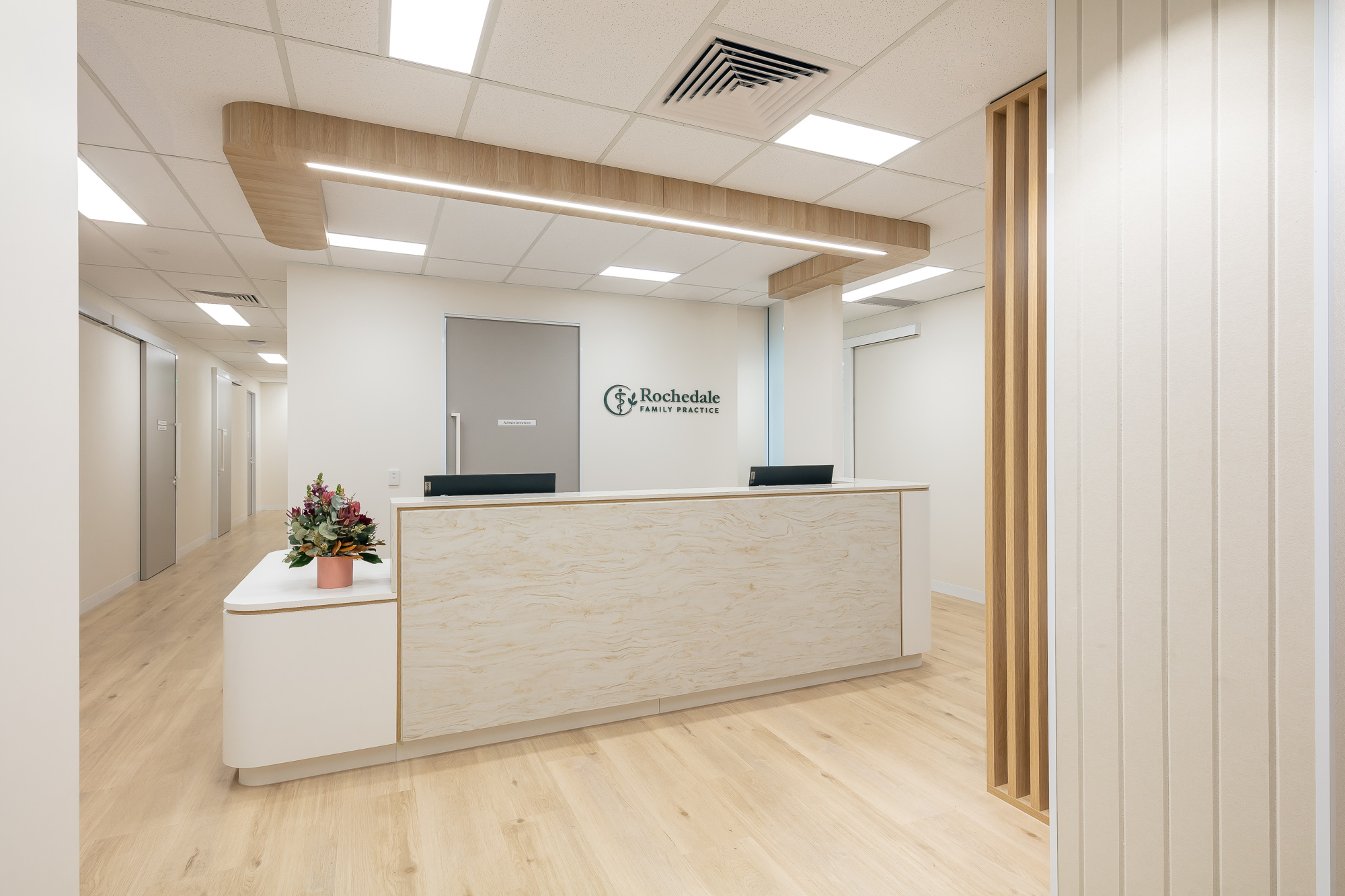
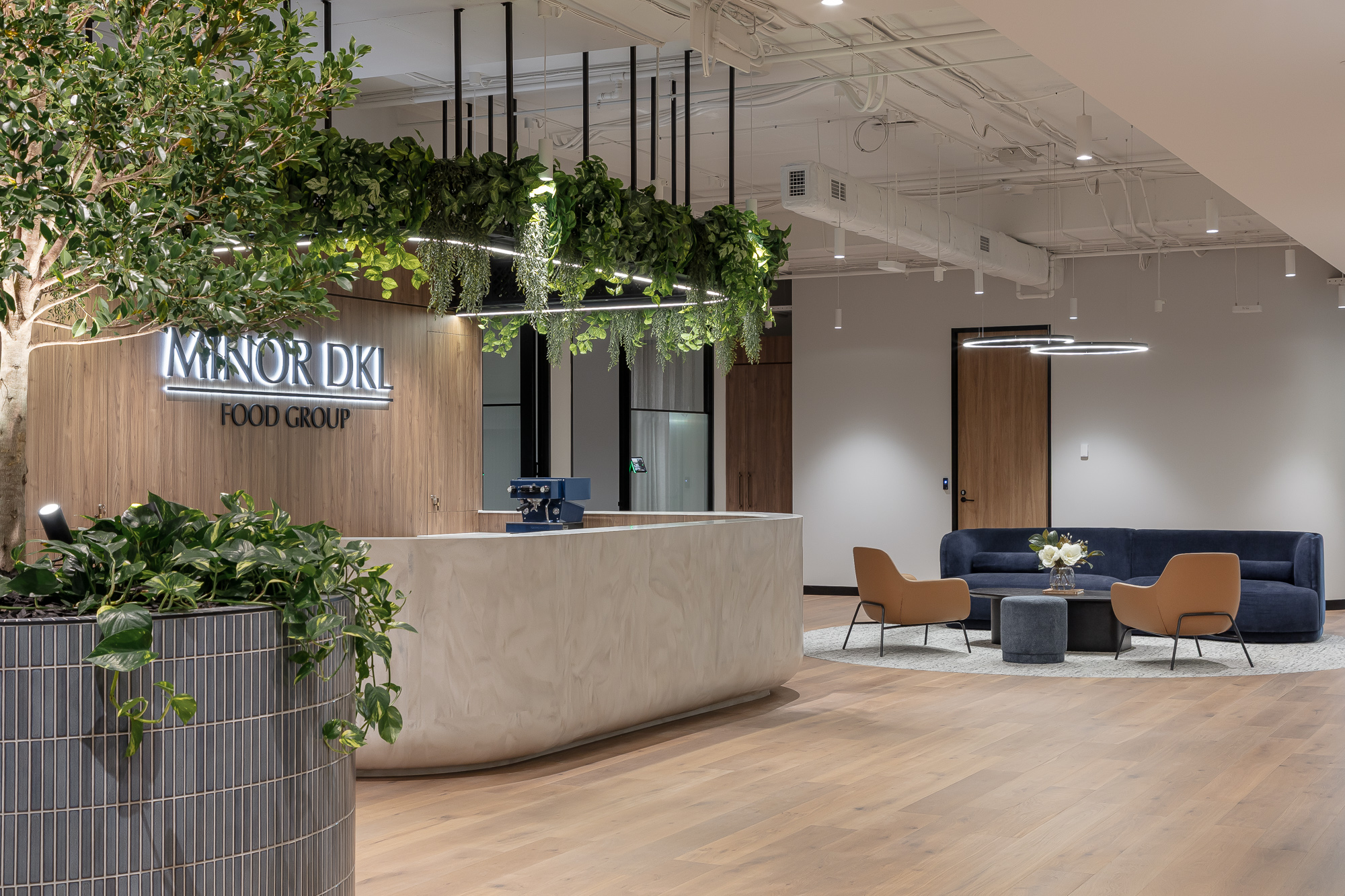
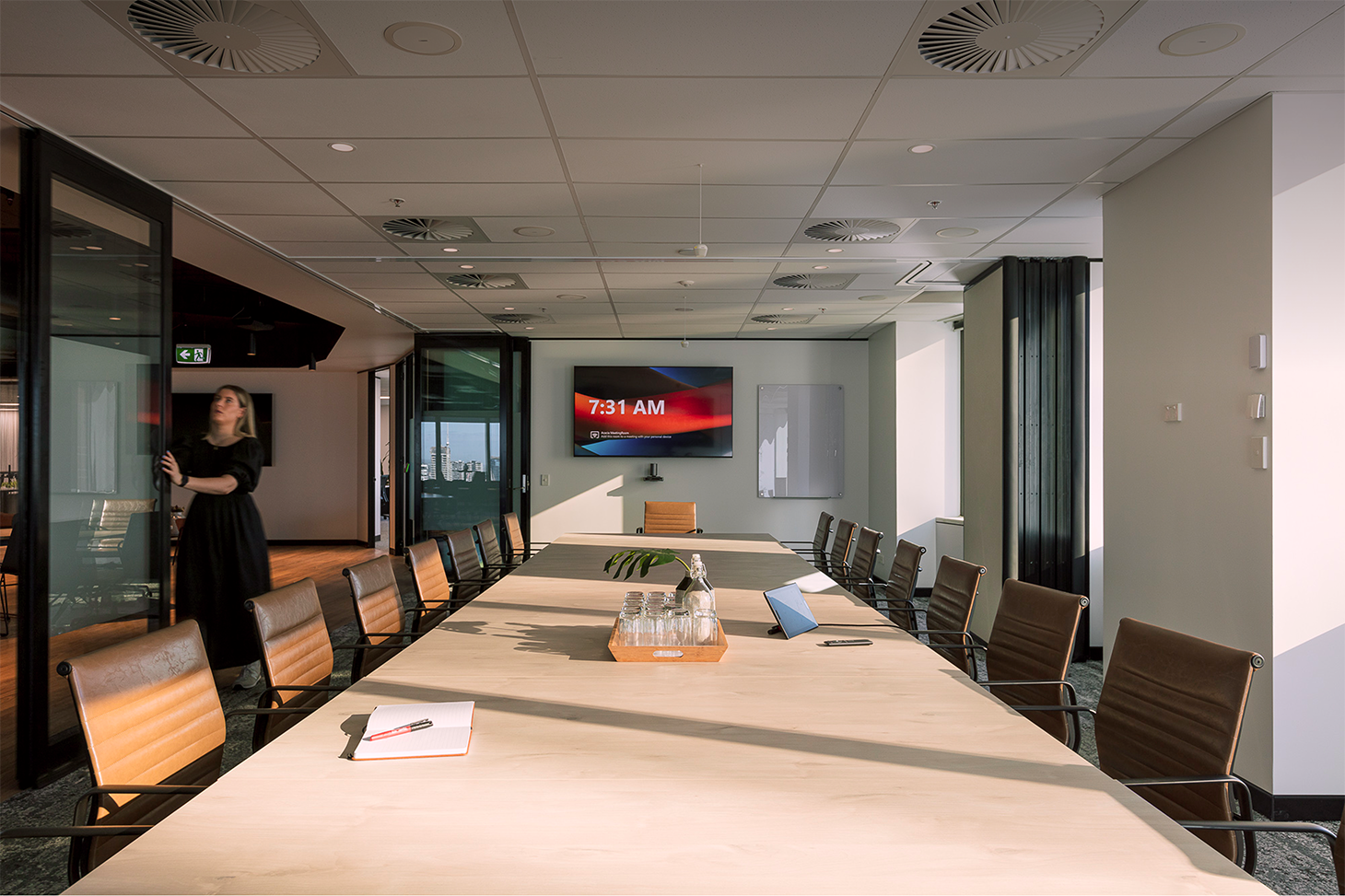
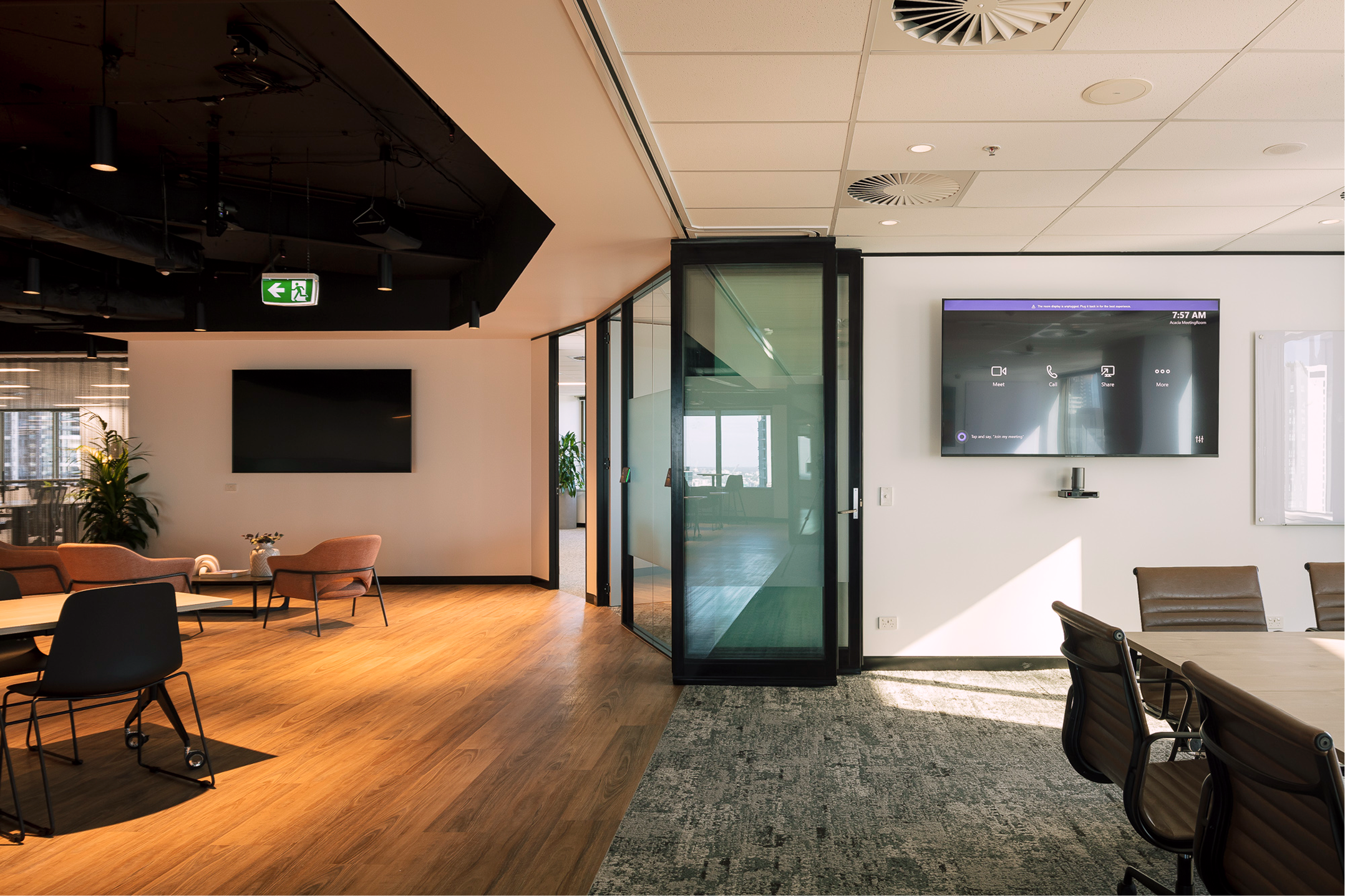
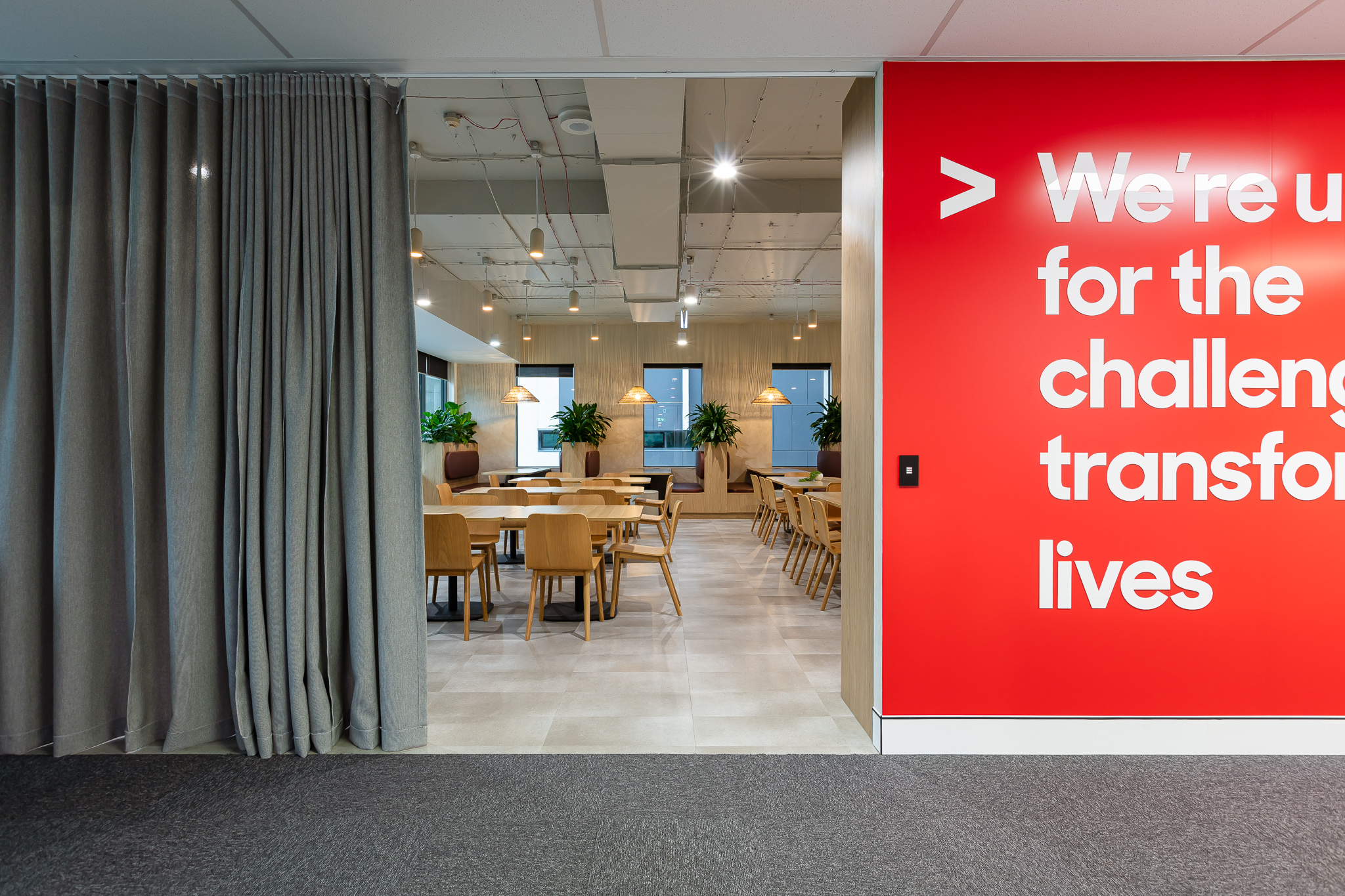
The most significant change we’re seeing is physical. Businesses are removing the barriers between their boardrooms and the spaces around them — reception areas, breakout zones, and kitchen hubs.
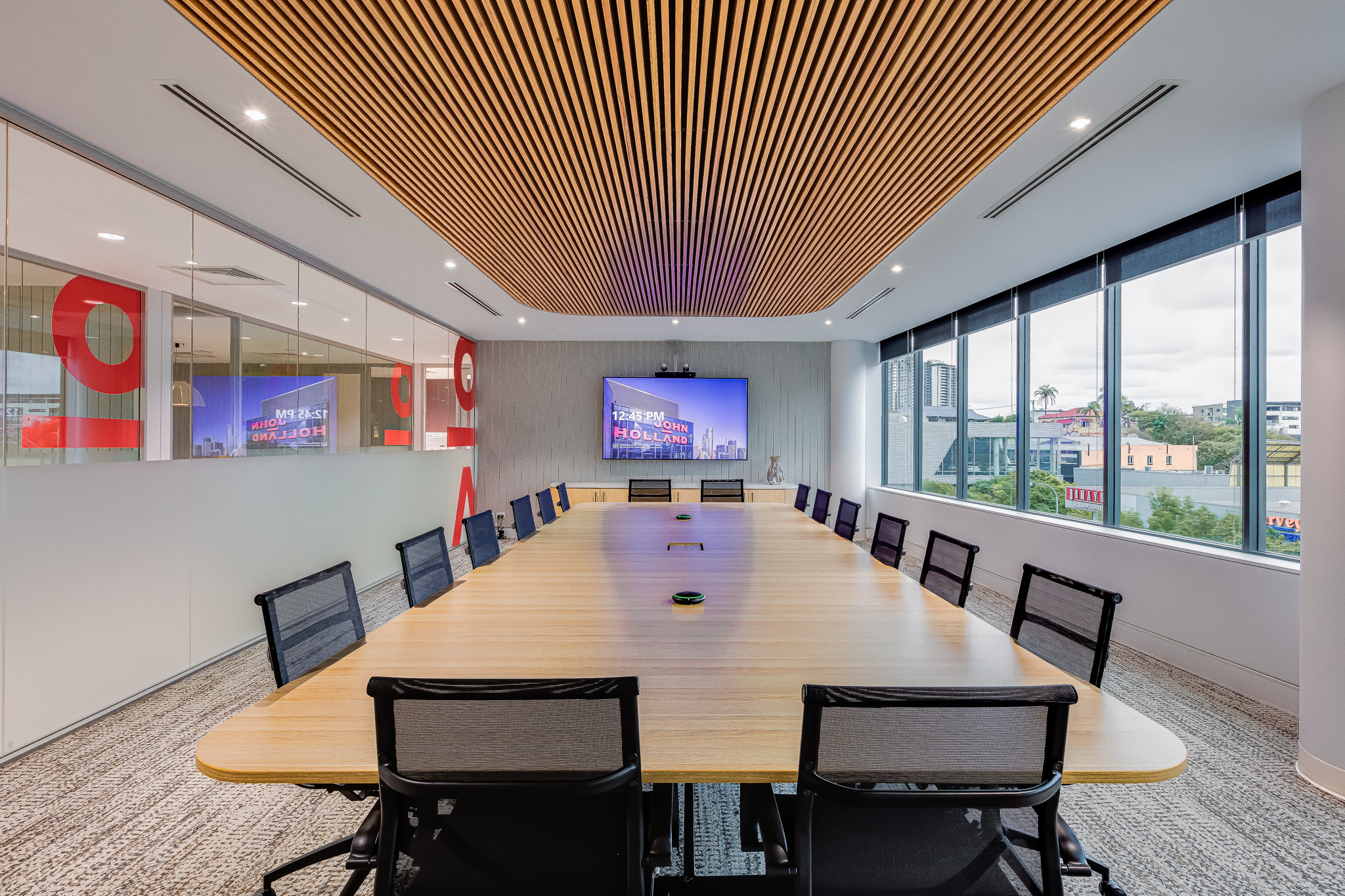
In practice, that means operable walls and wider door systems that allow the boardroom to open directly onto a reception or breakout area. When a client walks in, they’re not cordoned off from the rest of the business. They’re invited into it.
The effect is immediate. Clients see real people doing real work. They get a sense of the energy, the values, and the way a business actually operates — not a curated version of it behind closed doors.
We’ve delivered this for clients like Peabody, Northrop, and John Holland — and the intent is always the same: build trust and authenticity by giving clients a front-row seat to the culture.
The boardroom as a third space
What we’re also seeing is the boardroom pulling double or triple duty. It’s no longer reserved exclusively for formal meetings. It’s a lunch venue, a town hall, a client entertainment space, and an event hub — sometimes all in the same week.
At Peabody, we replaced the glass and door system so the boardroom could open wide onto reception. Boardroom lunches became events — canapés and champagne in reception, then guests flow through into the meeting space. The formality dropped, but the impact went up.
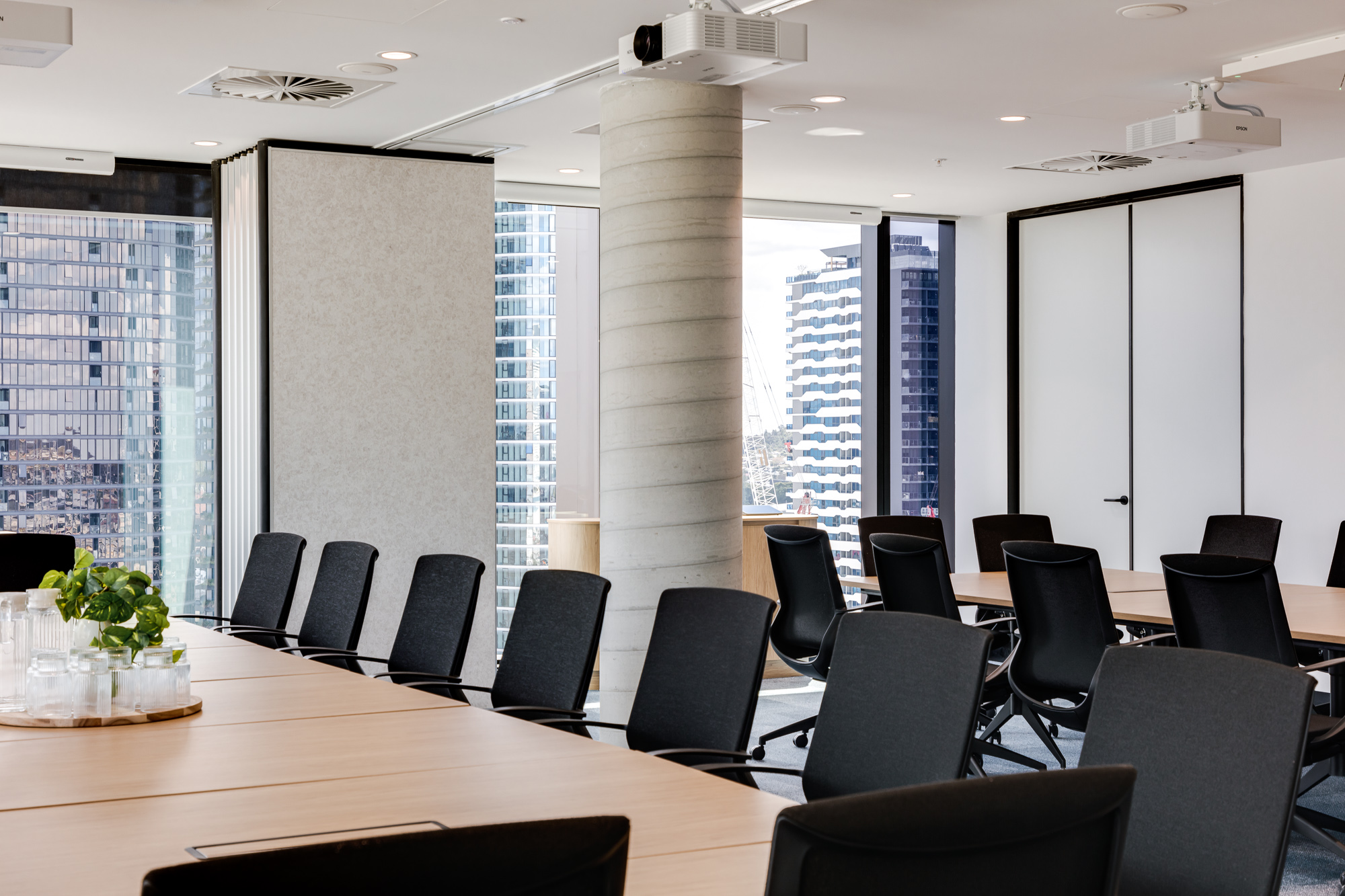
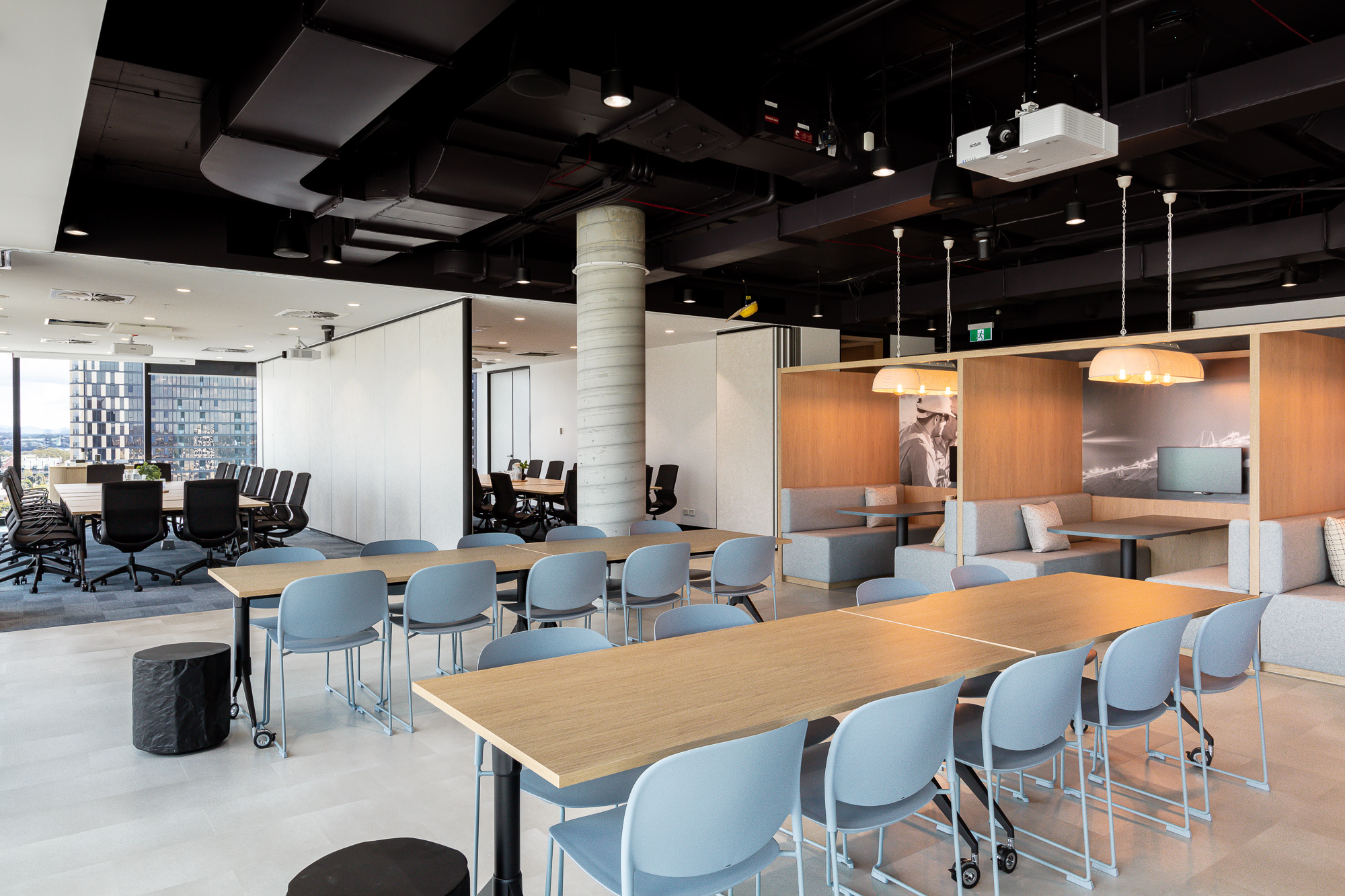
At Northrop, the breakout became the centrepiece — purpose-built to host 100 to 150 people for firm-wide events and client entertainment. We’re also seeing growing demand for interconnecting walls across multiple meeting rooms, allowing businesses to scale spaces up or down depending on the occasion — from a six-person client meeting to a full firm town hall.
Flexibility isn’t a nice-to-have anymore. It’s a baseline requirement.
The breakout connection
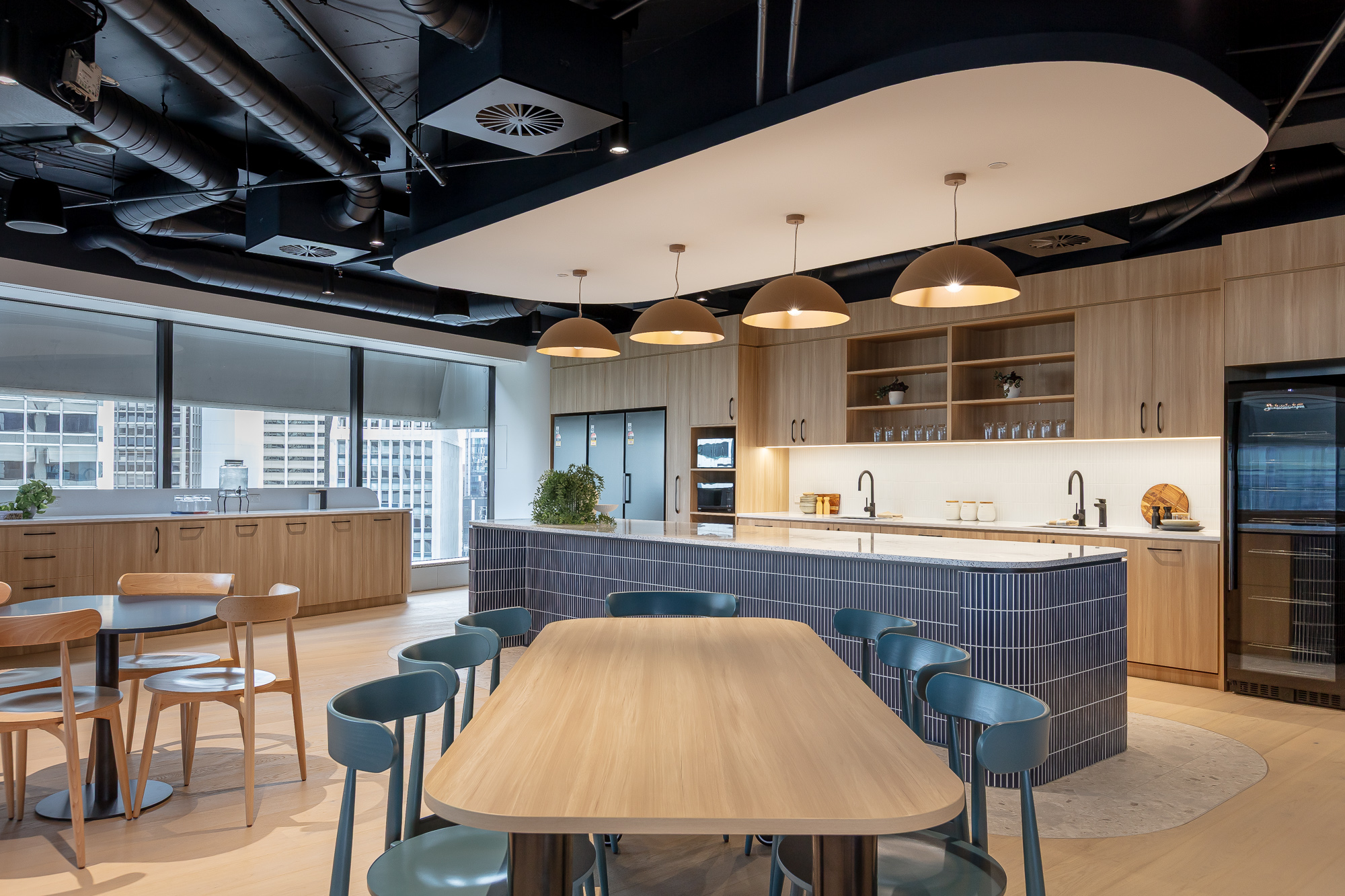
The boardroom shift doesn’t exist in isolation. It’s happening alongside a parallel trend: the growing size and strategic importance of kitchen and breakout spaces.
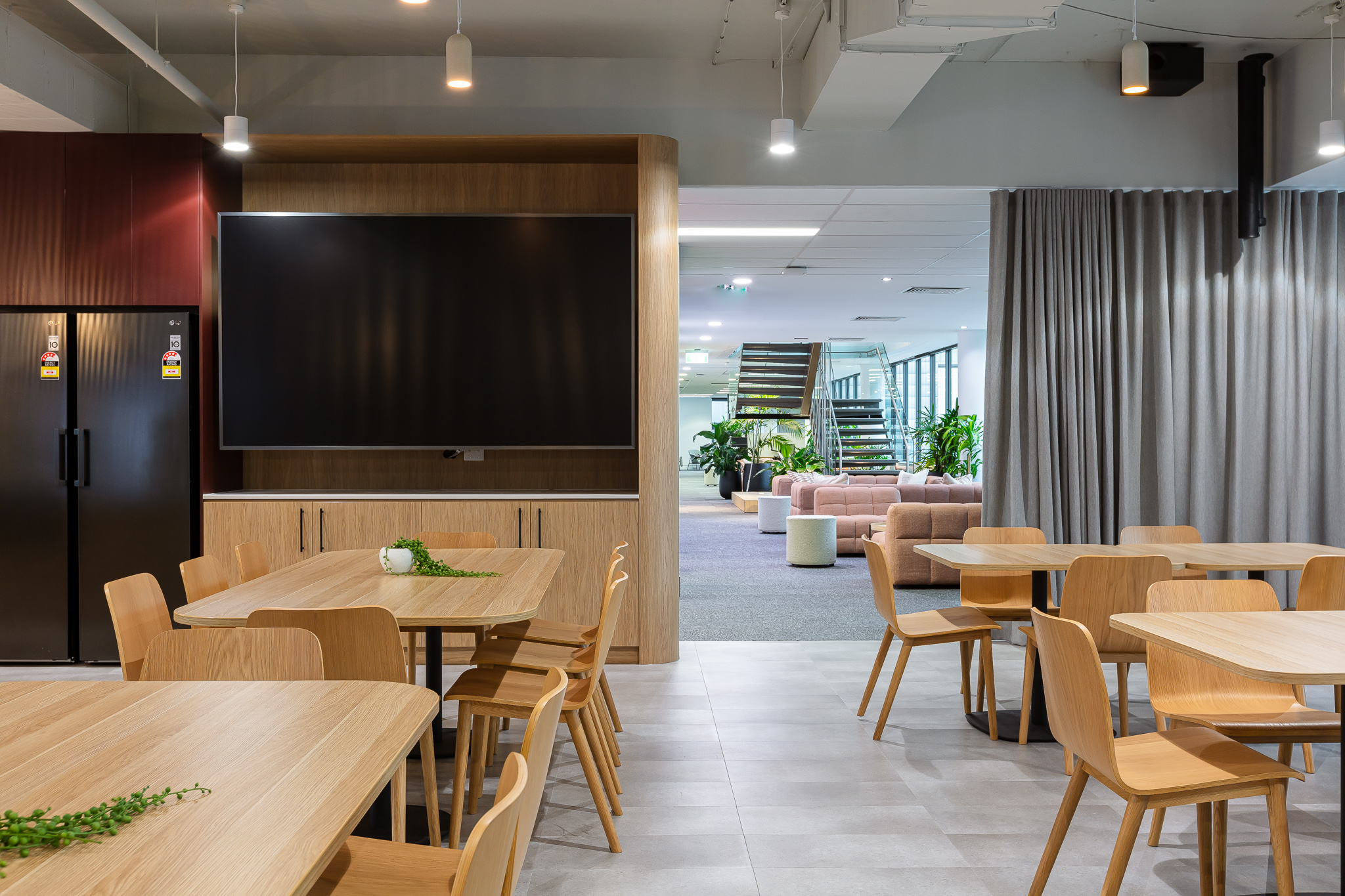
In many of our projects, the breakout has become the social heart of the workplace. And when the boardroom opens onto or sits adjacent to that breakout, the two spaces reinforce each other. Clients experience the buzz. Staff see their space being used to its full potential. The whole floor feels connected.
We worked on John Holland‘s multi-floor fitout, where each level had its own kitchen, and teams were operating in silos with almost no cross-pollination. The solution was to consolidate into one large, central breakout — a kitchen town hall that gave every team a reason to come together. The boardroom strategy was part of that same thinking: stop designing rooms in isolation and start designing how people move, meet, and connect.
What this means for your next fitout
If you’re approaching a lease renewal, a refurbishment, or a relocation, the boardroom is one of the first spaces worth interrogating. A few questions we challenge our clients with early in the process:
Who actually uses this space, and how often?
Is it serving one function or could it serve three?
Does a client walking into this room get a true sense of who you are?
Can this space flex for 10 people and 150 people?
Is the boardroom creating connection — or cutting people off from it?
The businesses getting the most out of their workplaces right now are the ones treating the boardroom not as a formality, but as a strategic asset. It should reflect the brand, support the culture, and work hard every single day — not just when clients are in the building.
Growth Workplace Design partners with businesses across Brisbane to deliver workplaces that perform.
If you’re rethinking your space, we’d love to talk.